Systems and devices for water treatment using reverse osmosis
Product overview

AQUArent®C
- 90 – 180 l/h

BlauWAL EVO
- 300 l/h, 600 l/h, or 900 l/h
- Maximum efficiency, perfect enjoyment: the new BlauWAL EVO sets new standards in water treatment

ROEM-VS / ROEM-VSG
- 300 l/h – 900 l/h

UOC
- 90 l/h – 450 l/h
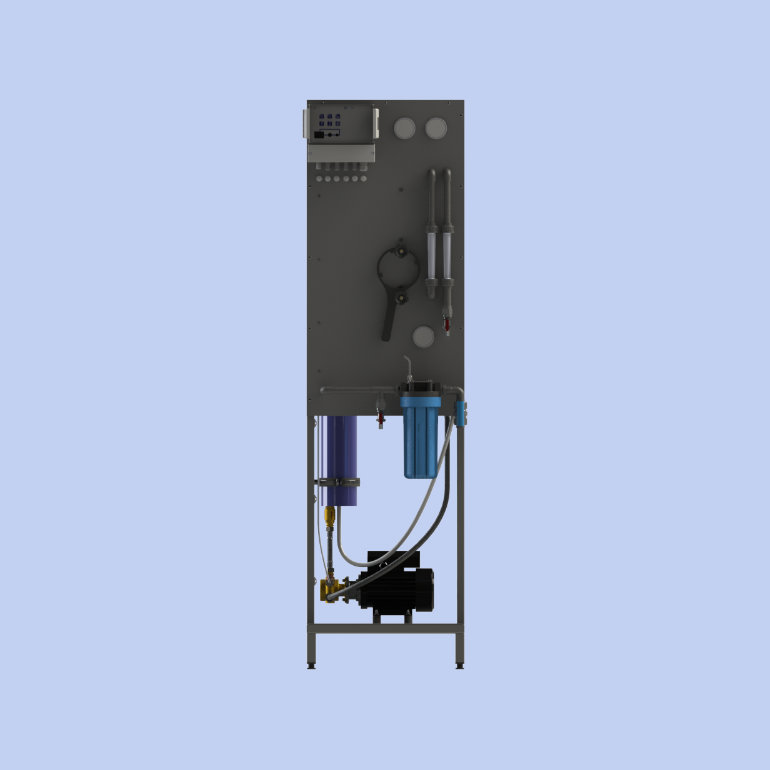
UON-90 - UON-400
- 90 l/h – 400 l/h
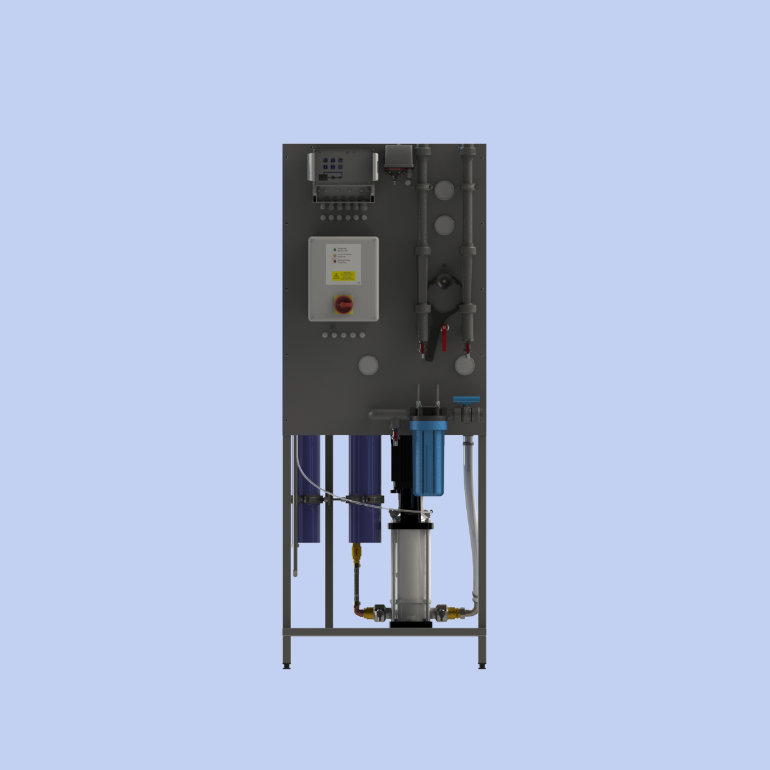
UON-500 - UON-1350 FL
- 500 l/h – 1350 l/h
- Facelift for the UON-500 - UON-1350 series, which has proven itself over many years
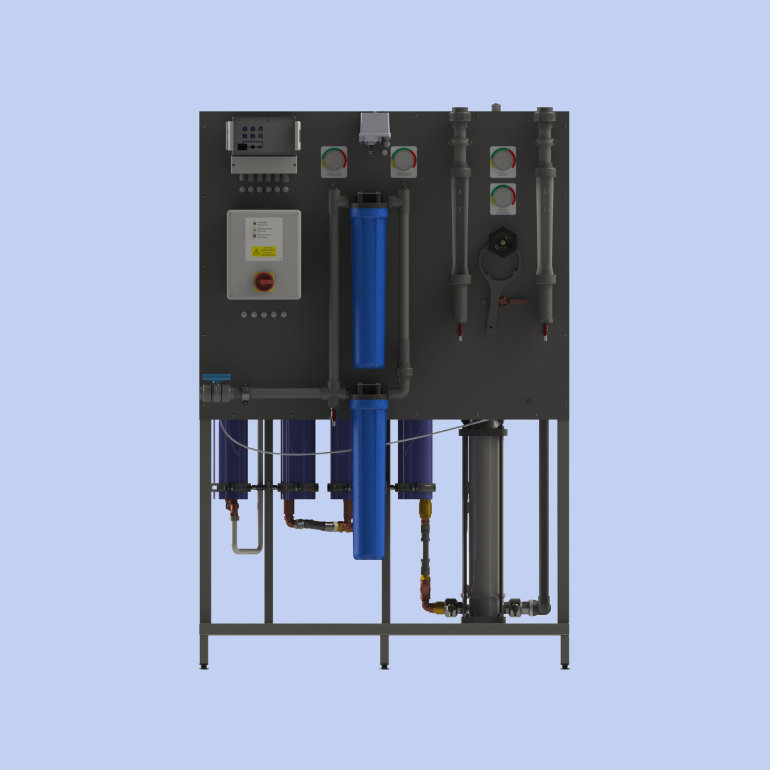
UON-1700 - UON-3200 FL
- 1700 l/h – 3200 l/h
- Facelift for the UON-1700 - UON-3200 series, which has proven itself over many years

UOR2-4000 - UOR2-16000
- 4000 l/h – 16000 l/h
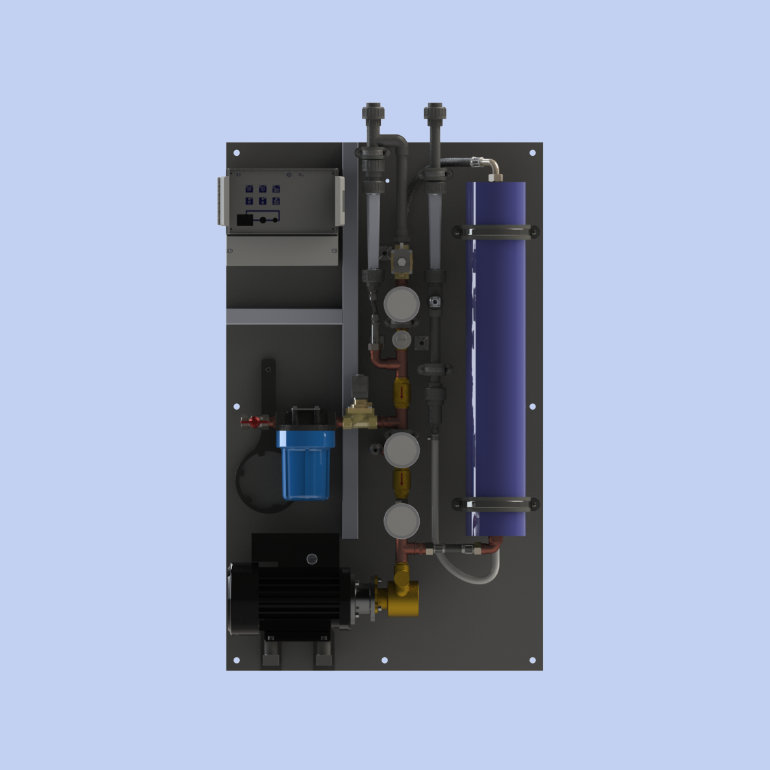
UOWP-70 - UOWP-300
- 70 l/h – 300 l/h
Informations
Our reverse osmosis systems are completely pre-assembled, electrically wired and tested at the factory.
Process engineering
In terms of environmental friendliness, waste water pollution, cost-effectiveness and user-friendly, fully automatic operation, the reverse osmosis process has become established for the demineralisation of water.
As the reverse osmosis process is purely physical, the use of regeneration chemicals is not necessary. Compared to conventional demineralisation using cation and anion exchange, the high costs for handling and storing acids and alkalis are eliminated, as are the costs for neutralising the regeneration waste water.
It must be noted, however, that in many cases pre-treatment of the water to be demineralised is unavoidable with reverse osmosis.
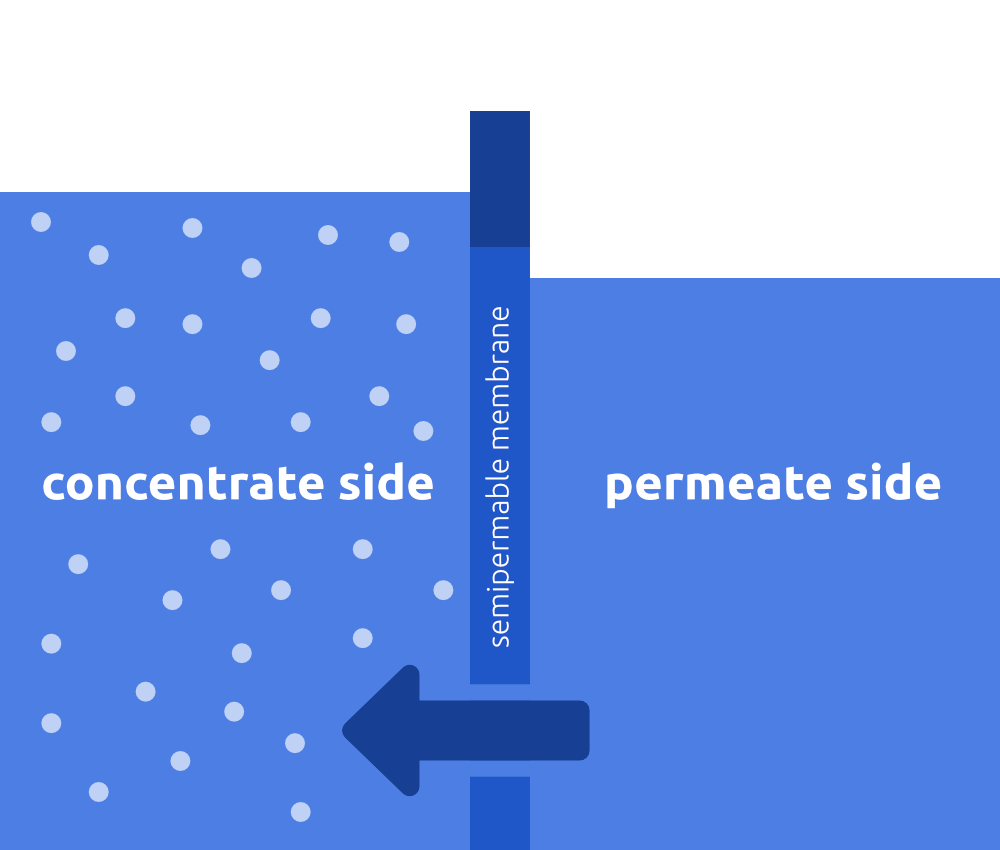
The phenomenon of osmosis occurs when pure water diffuses from a weak salt solution through a semi-permeable membrane into a more concentrated salt solution.
This process is illustrated in the first picture on the right. A semi-permeable membrane, in this case only permeable to water, separates a vessel into two halves. One half of the vessel is filled with a concentrated salt solution and the other half with pure water. Due to the difference in concentration, water from the weak solution (in this case the "permeate side") diffuses through the membrane and dilutes the concentrated solution (in this case the "concentrate side"). The decrease in volume of the weak solution is proportional to the increase in volume of the concentrated solution and the concentrations of both sides become closer and closer.
The constantly increasing pressure on the membrane surface caused by the increase in volume on the "concentrate side" has a diffusion-inhibiting effect and continuously slows down the aforementioned process until it comes to a complete standstill.
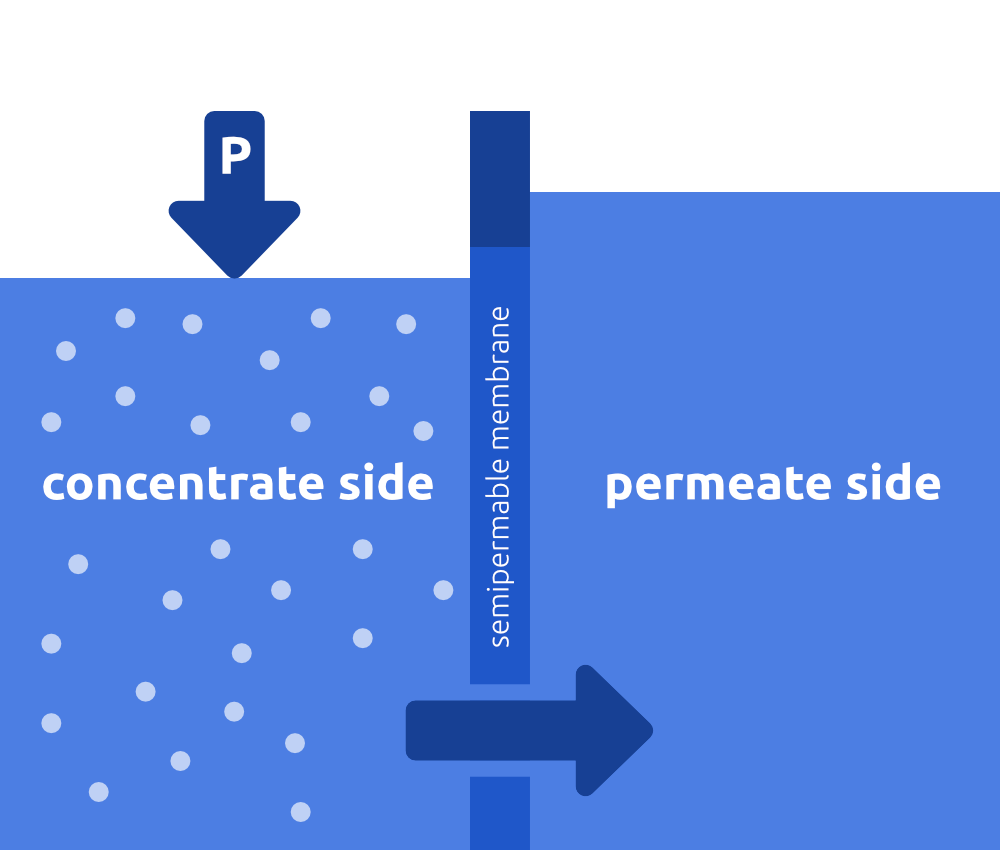
If additional external pressure is now applied to the "concentrate side" of the solution, the osmosis process can be reversed. This process is shown in the second picture.