- Single-valve design
- Water meter controlled
- Capacity 2800 to 7200 m³x°d°
- DN50 to DN100
Usage
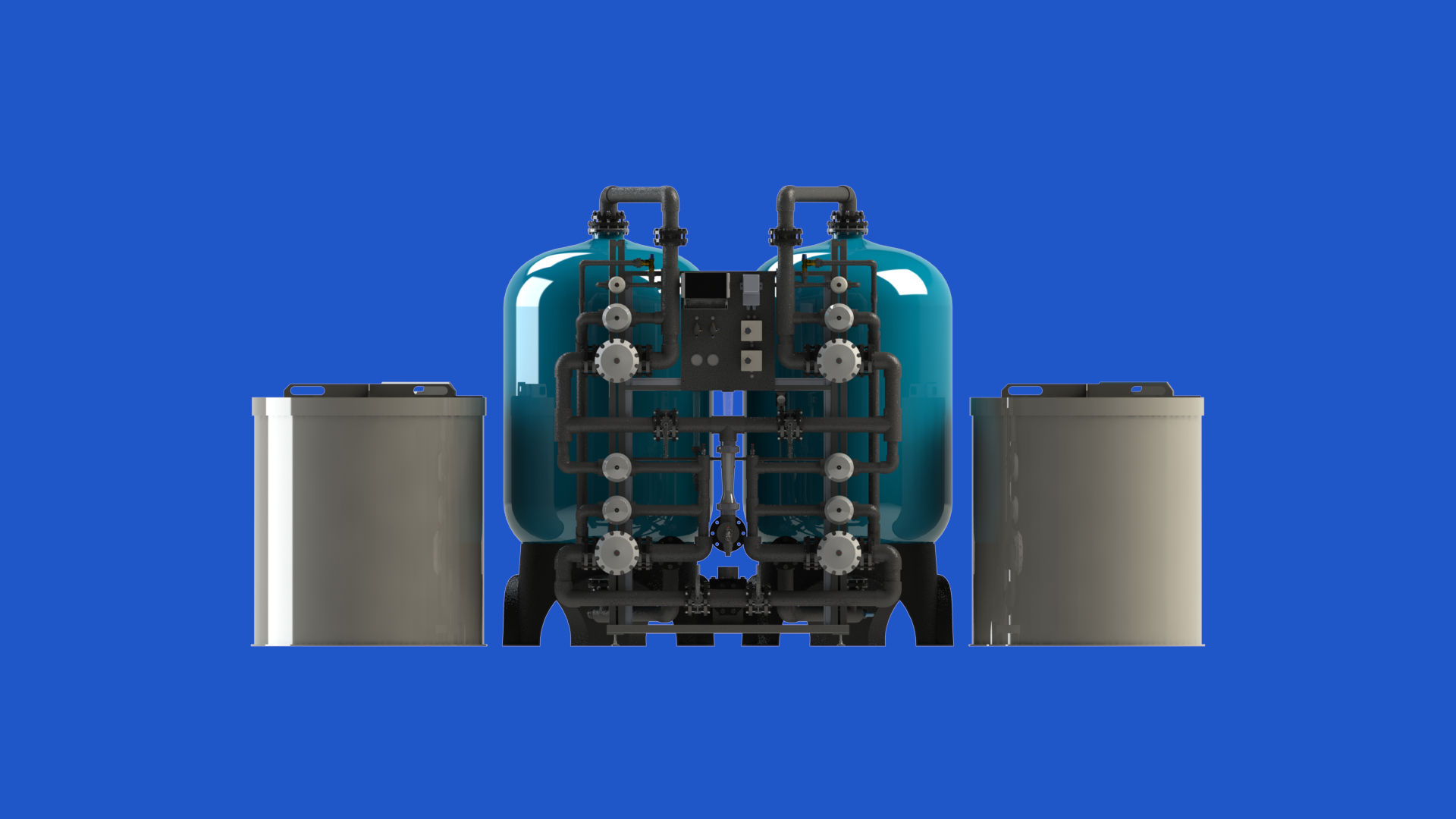
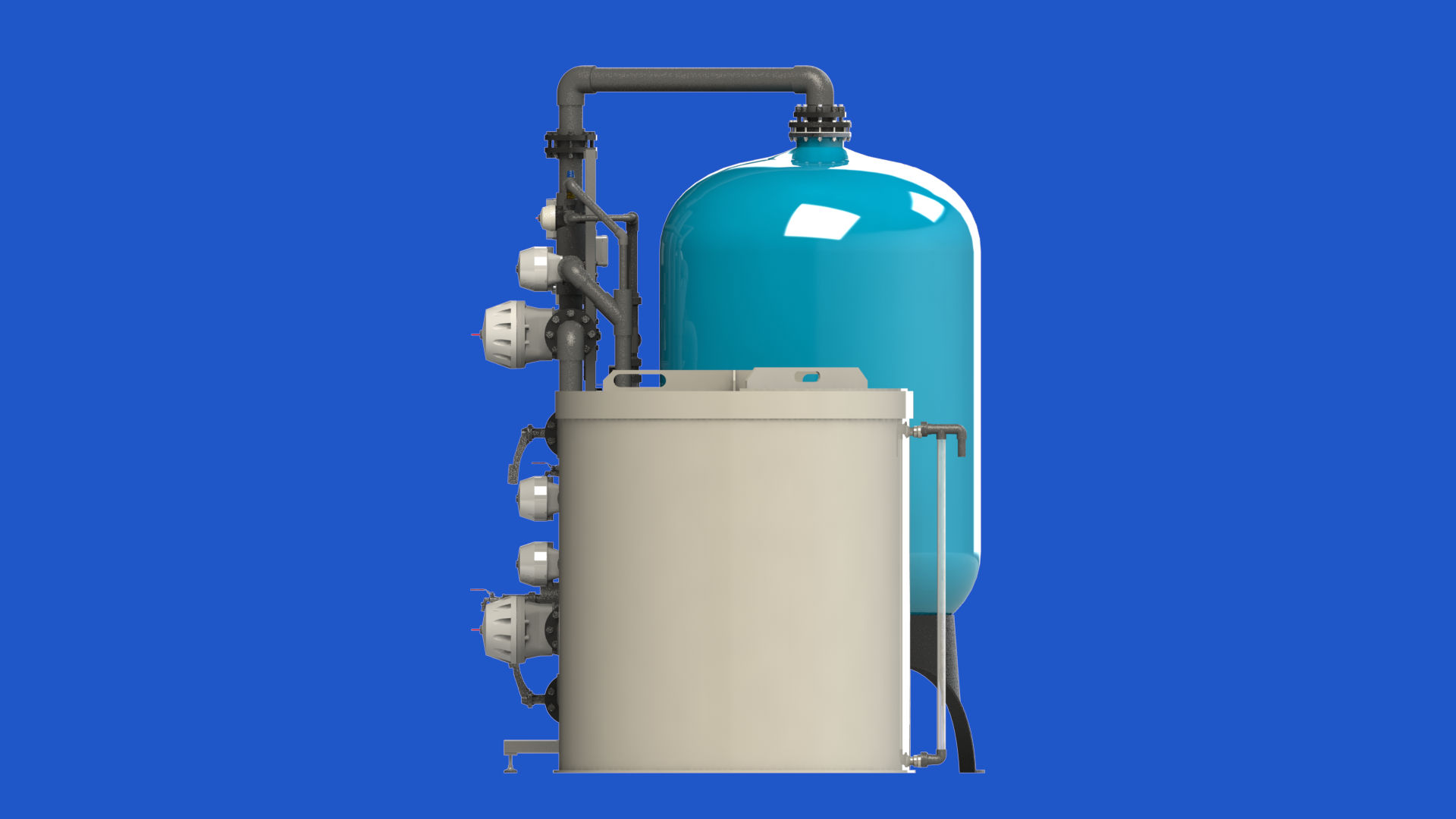
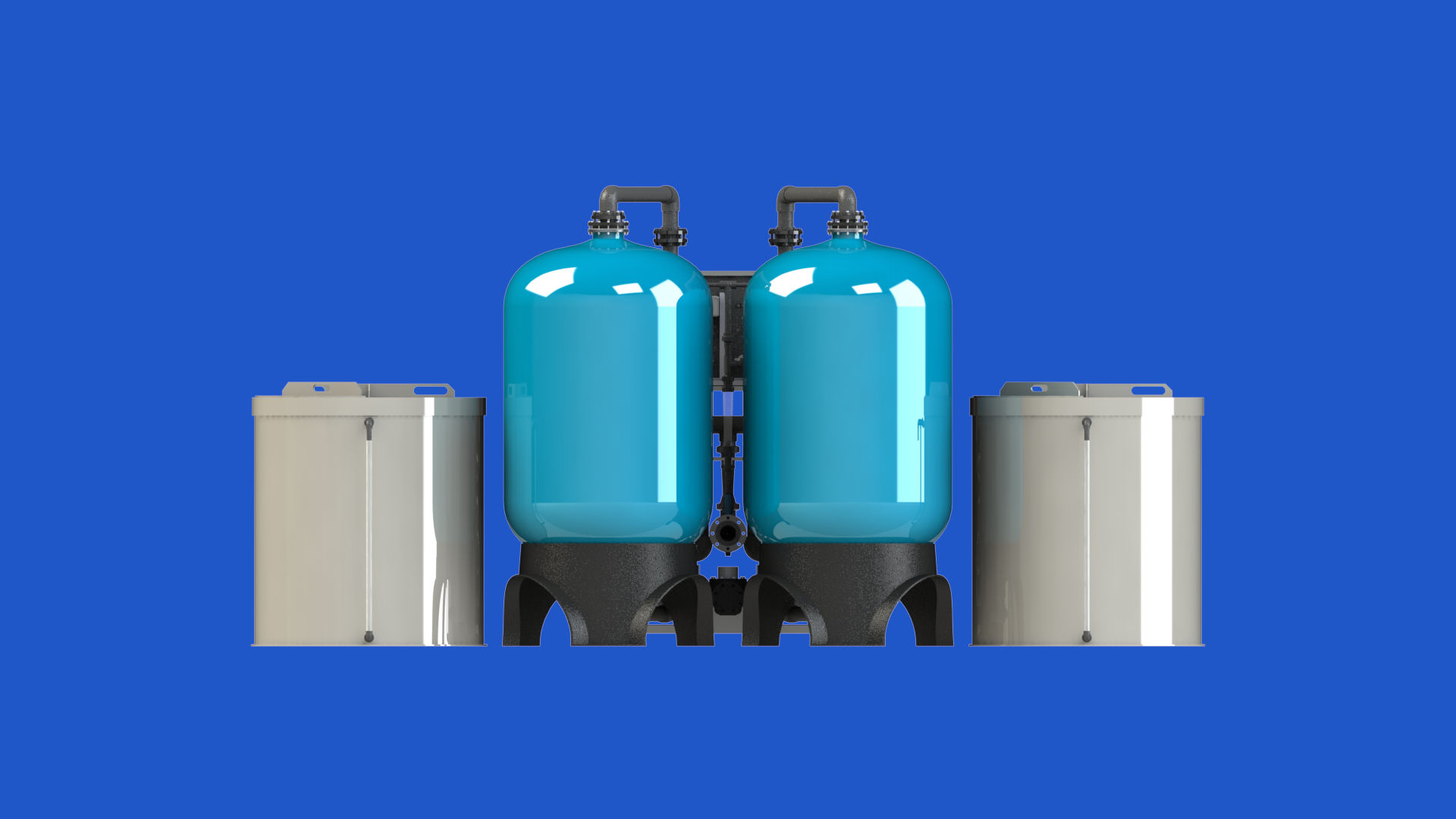
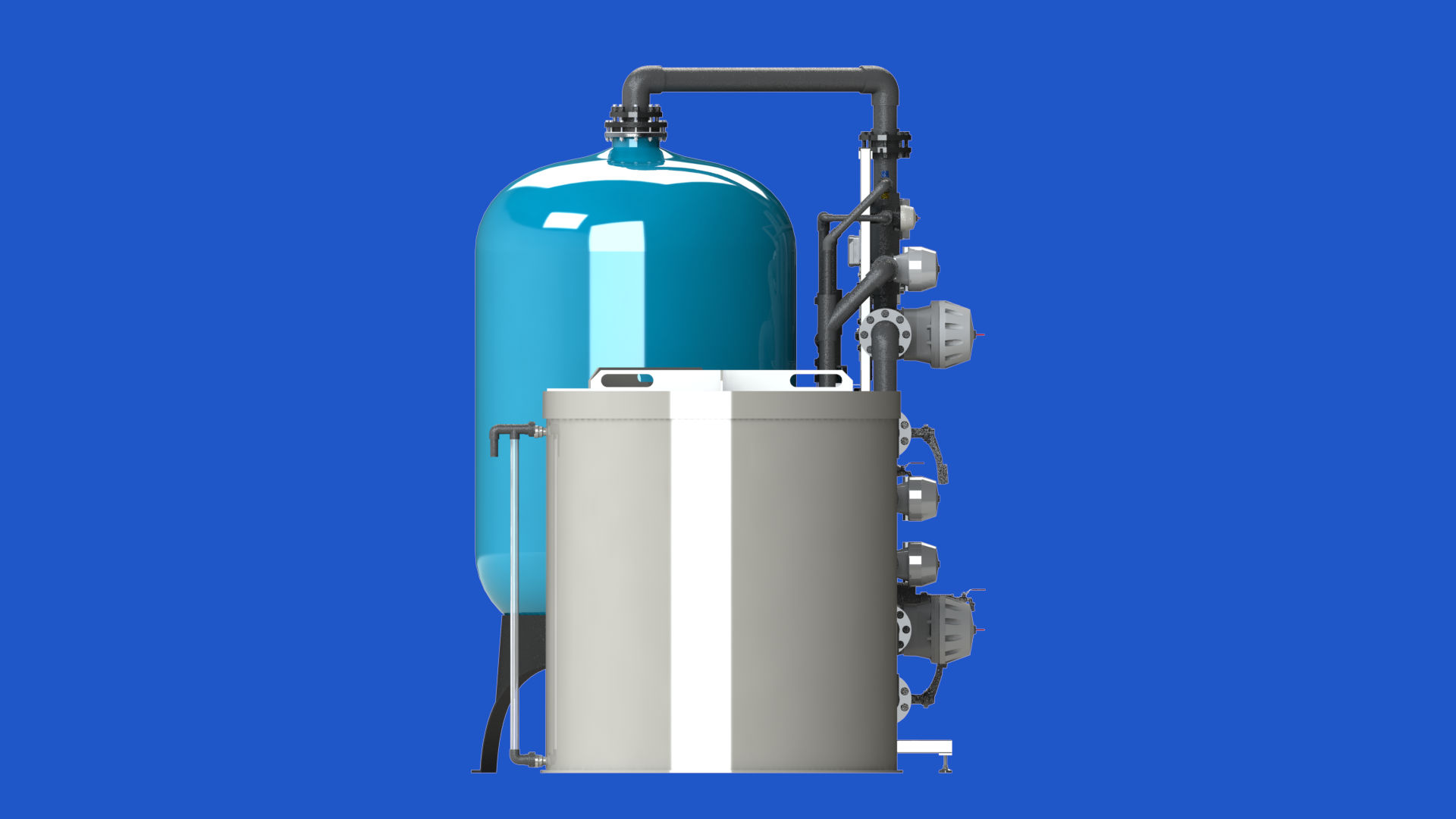
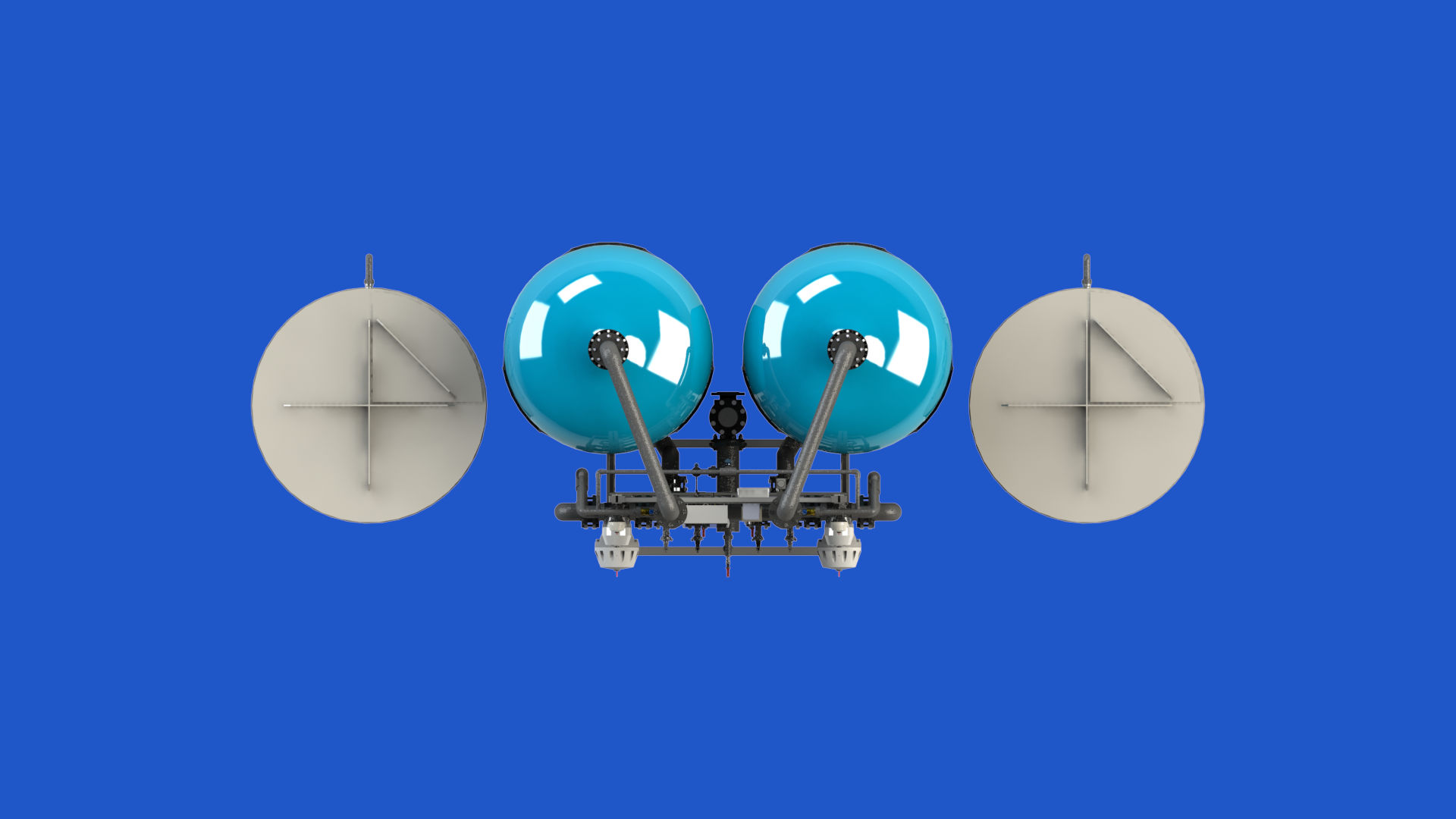
The double water softening systems in the DWE series are used to soften drinking water or well water to drinking water quality.
The systems are used wherever an uninterrupted supply of soft water must be ensured.
- Boiler feed water treatment
- Cooling water treatment
- For reverse osmosis systems
- Building technology
- Air conditioning technology
- Parts cleaning systems
- Flushing technology
Functionality
Softening is based on the principle of ion exchange (neutral exchange). Hard water is passed through an ion exchanger material, which removes the hardness minerals calcium and magnesium and replaces them with an equivalent amount of sodium ions.
Once the ion exchanger has reached the end of its capacity, it must be regenerated. This involves passing highly diluted brine over the exhausted exchanger material. Due to the high excess of sodium ions in the brine, the aforementioned process is reversed: the exchanger stores sodium ions and releases the retained calcium and magnesium ions in return. These are flushed out together with the rinse water as wastewater.
To ensure an uninterrupted supply of soft water, one of the two filter tanks is always in operation, while the second filter tank is either being regenerated or is ready for use after regeneration. The amount of soft water withdrawn is recorded by a contact water meter and transmitted to the control system. Once the capacity of the tank in operation has been exhausted, the control system automatically switches to the tank on standby. The exhausted filter tank is then regenerated. The piping is equipped with ten 2/2-way valves. These valves control the water flow through the tanks as well as the regeneration phases:
- Backwashing
- Salting/Slow washing
- Eashing out
- Refill salt dissolving container
Advantages
High flow capacity
Robust distribution system with stable nozzle arms for optimal capacity utilization
Diaphragm valves for plant control
Control medium: compressed air
Salt dissolving tank made of welded PP, with sieve bottom for dry storage of the regeneration salt and for precise determination of the brine quantity
Safety brine valve for safe extraction and controlled refilling
Microprocessor control with pilot manifolds
Floating body flow meter at the raw water inlet
Vacuum breaker per filter container
Pressure relief valve per filter container
Two shut-off valves per filter container as end valves, flangeable on one side
Piping and control assembly on a stainless steel frame, fully assembled and tested at the factory
High-quality cation exchange material in food grade quality
Fully automatic operation
Low support and maintenance requirementsv
Space-saving design
Low operating costs
Simple control
Scope of delivery
Largely pre-assembled, ready-to-connect double softening system for free installation, consisting of:
Piping and control assembly with contact water meter mounted on a stainless steel frame
Two filter containers made of glass fiber reinforced plastic, each filled with high-quality cation exchange material in food grade quality.
PVC pipe set
Salt dissolving tank made of welded PP, with sieve bottom, level indicator, and brine valve